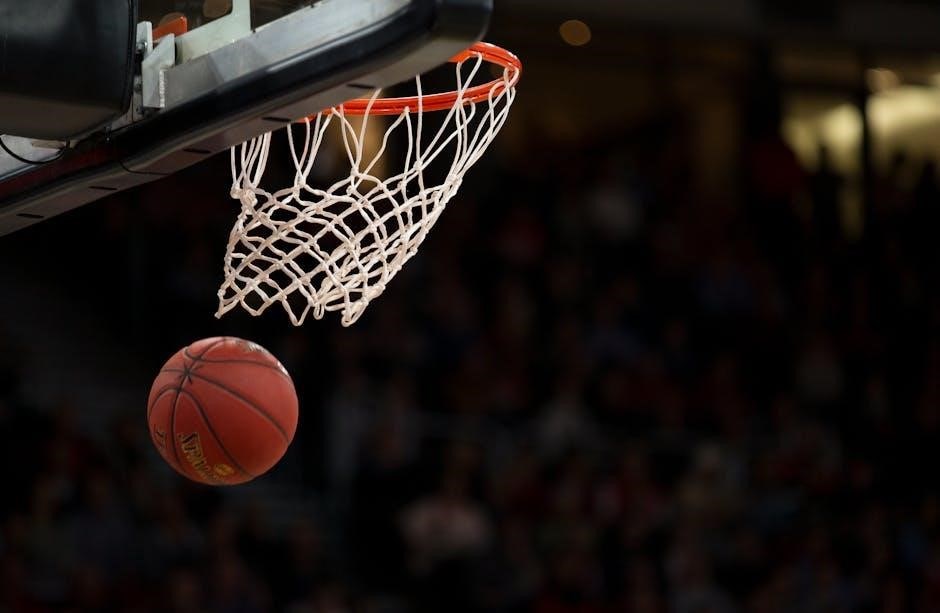
basketball manual
Basketball Manual: A Comprehensive Guide
Welcome to the definitive resource for all things basketball! This manual details rules, strategies, and skills, reflecting the NFHS updates for the 2025-26 season.
Basketball, a dynamic and globally beloved sport, demands a unique blend of athleticism, strategy, and teamwork. This manual serves as your comprehensive guide, whether you’re a novice player, a seasoned coach, or a passionate fan eager to deepen your understanding. We’ll explore everything from foundational skills – dribbling, passing, shooting, and rebounding – to complex offensive and defensive schemes.
Furthermore, we will delve into the nuances of each player position and the evolving rules of the game, specifically highlighting the National Federation of State High School Associations (NFHS) updates implemented for the 2025-26 season. Prepare to elevate your basketball IQ!
The History of Basketball
Basketball’s origins trace back to December 1891, when James Naismith, a physical education instructor at Springfield College in Massachusetts, sought a less injury-prone sport than football for his students. He devised thirteen basic rules and utilized peach baskets as hoops, marking the birth of a revolutionary game.
The early years saw rapid development and spread across the United States and internationally. This eventually led to the formation of the Basketball Association of America (BAA) in 1946, which later merged with the National Basketball League (NBL) to become the NBA – a league that continues to shape the sport today.
Early Years and Development
Following its 1891 inception, basketball quickly gained traction in YMCA’s and colleges nationwide. Early games differed significantly from the modern sport, with a greater emphasis on passing due to limitations in dribbling techniques and court sizes. The initial peach baskets were replaced with metal hoops and backboards soon after, improving gameplay.
The first intercollegiate basketball game occurred in 1892, further fueling the sport’s expansion. Rule refinements continued, addressing issues like physical play and scoring. These formative years established the fundamental principles that would underpin basketball’s future evolution and global appeal.
The Rise of the NBA
Founded in 1946 as the Basketball Association of America (BAA), the NBA emerged from a desire for a professional basketball league. A merger with the National Basketball League (NBL) in 1949 solidified its position, officially becoming the National Basketball Association. Early struggles with financial viability and public interest were overcome through strategic marketing and showcasing exceptional talent.
The league gained significant momentum in the 1950s and 60s, propelled by iconic players like George Mikan and Bill Russell. Television deals and increased media coverage further elevated the NBA’s profile, laying the groundwork for its current global dominance.
Fundamental Skills
Mastering the core skills is paramount for success in basketball. These building blocks – dribbling, passing, shooting, and rebounding – form the foundation of individual and team performance. Consistent practice and focused drills are essential for developing proficiency in each area.
Effective dribbling allows for ball control and movement, while accurate passing facilitates team play. A refined shooting form ensures consistent scoring opportunities, and aggressive rebounding secures possessions. These skills, when honed, unlock a player’s full potential on the court.
Dribbling Techniques
Effective dribbling is more than just bouncing the ball; it’s about control, agility, and protecting possession. Key techniques include keeping your head up to scan the court, using fingertips for control, and varying dribble height for deception. Mastering crossover, between-the-legs, and behind-the-back dribbles expands your offensive arsenal.
Practice dribbling with both hands equally to become a versatile ball-handler. Maintaining a low center of gravity enhances stability and allows for quicker changes of direction, crucial for evading defenders and creating scoring opportunities.
Passing Essentials
Precise passing is the lifeblood of a successful offense, facilitating ball movement and creating open shots. Master the chest pass for quick, direct delivery, the bounce pass for navigating defenders, and the overhead pass for longer distances. Focus on snapping your wrists for accuracy and velocity.
Look at your target before passing, and use a fake to mislead the defense. Passing should be crisp and on target, leading the receiver to an advantageous position. Anticipation and court vision are vital for effective passing.
Shooting Form and Practice
Developing a consistent shooting form is paramount for scoring success. Begin with proper footwork – balanced stance, knees bent, and pointing towards the basket. Maintain a 90-degree angle at your elbow, forming a “L” shape. Follow through completely, snapping your wrist and extending your arm towards the target.

Consistent practice is key! Utilize drills focusing on form shooting, spot shooting, and shooting off the dribble. Repetition builds muscle memory and improves accuracy. Record yourself to identify and correct flaws.
Rebounding Strategies
Dominating the boards requires a combination of positioning, timing, and tenacity. Box out your opponent before the shot goes up, establishing position between them and the basket. Track the ball’s trajectory and anticipate where it will come off the rim.
Secure the rebound with two hands, bringing the ball into your body to protect possession. Offensive rebounding demands aggressive pursuit and quick reactions. Practice rebounding drills to improve your technique and strength, vital for gaining second-chance points.
Positions in Basketball
Basketball thrives on specialized roles, each demanding unique skills and responsibilities. Understanding these positions is crucial for team success. The Point Guard orchestrates the offense, prioritizing ball-handling and passing. Shooting Guards excel at perimeter shooting and creating scoring opportunities.
Small Forwards are versatile, blending scoring, rebounding, and defense. Power Forwards provide interior strength and rebounding prowess, while Centers dominate the paint with size and shot-blocking ability. Mastering your position enhances overall team performance.
Point Guard Responsibilities
The Point Guard functions as the team’s floor general and primary ball-handler. Key responsibilities include initiating the offense, distributing the ball effectively, and maintaining a high assist-to-turnover ratio. Exceptional court vision and passing accuracy are paramount.
Point Guards must also demonstrate strong decision-making skills, controlling the tempo of the game and recognizing defensive weaknesses. Leadership qualities are essential, directing teammates and ensuring offensive execution. A skilled Point Guard elevates the entire team’s performance.
Shooting Guard Role
The Shooting Guard, often the team’s most prolific scorer, specializes in perimeter shooting. This position demands exceptional accuracy from long range, alongside the ability to create scoring opportunities off the dribble. Consistent jump shooting and a quick release are vital attributes.
Beyond scoring, Shooting Guards contribute by spacing the floor, attracting defensive attention, and providing secondary ball-handling. They must be capable of attacking closeouts and making smart decisions with the ball, impacting both offensive flow and overall team success.
Small Forward Attributes
The Small Forward is a versatile player, bridging the gap between guards and forwards. This position requires a blend of skills – adeptness at driving to the basket, reliable mid-range shooting, and solid rebounding capabilities. A strong understanding of offensive and defensive schemes is crucial.
Small Forwards often serve as secondary scorers and playmakers, capable of handling the ball in transition and creating opportunities for teammates. They need to be physically strong, possessing the agility to defend multiple positions effectively, contributing to overall team balance.
Power Forward and Center Duties
Power Forwards and Centers form the interior backbone of a basketball team. Their primary duties revolve around rebounding, protecting the rim, and establishing a strong post presence. Centers typically focus on interior scoring and defense, while Power Forwards blend inside play with developing mid-range shooting.
Both positions demand significant physical strength and size. Effective screening, setting solid picks, and altering opponents’ shots are vital. They must also exhibit good footwork and defensive awareness, contributing to a team’s overall defensive solidity and interior control.
Offensive Strategies

A successful offense requires more than individual skill; it demands strategic execution. Teams employ various offensive systems to maximize scoring opportunities. Key strategies include the Pick and Roll, a dynamic play utilizing a screen to free up a ball-handler, and the Motion Offense, emphasizing player movement and passing to create openings.
Understanding Zone Offense tactics is also crucial, as it focuses on exploiting weaknesses in zone defenses. Effective offensive play relies on spacing, timing, and reading the defense, ultimately aiming for high-percentage shots and consistent scoring.
Pick and Roll Offense
The Pick and Roll, or screen and roll, is a fundamental offensive maneuver. It involves a player setting a screen for the ball-handler, creating a lane to the basket or an open jump shot. Success hinges on precise timing and communication between the two players involved.
Variations include slipping the screen, popping for a mid-range shot, or rolling to the basket. Defenders must navigate the screen legally, while offensive players exploit mismatches and create scoring opportunities. Mastering this play is vital for any competitive team.

Motion Offense Principles
Motion offense prioritizes constant player movement and passing to create scoring opportunities. It relies on principles like cutting, screening, and spacing to disrupt the defense and generate open looks. Players must read the defense and react accordingly, making quick decisions based on positioning and passing lanes.
Effective motion offense demands unselfish play and a commitment to ball movement. It’s about creating advantages through teamwork, not relying on isolation plays. Proper spacing prevents defensive congestion, allowing for easier penetration and passing.
Zone Offense Tactics
Successfully attacking a zone defense requires patience and strategic ball movement. Overloading one side of the zone, followed by a quick ball reversal, can create openings. Utilizing short corner players to stretch the zone horizontally is crucial, forcing defenders to cover more ground.
Penetration into the gaps of the zone, coupled with kick-out passes to open shooters, is a key tactic. Offensive rebounding becomes paramount, as zones often limit box-out opportunities. Consistent, purposeful passing breaks down the zone’s structure.
Defensive Strategies
A robust defense is the cornerstone of any successful basketball team. Employing a variety of defensive approaches keeps opponents guessing and disrupts their offensive rhythm. Understanding the strengths and weaknesses of each strategy – man-to-man, zone, and pressing – is vital for effective implementation.
Successful defense relies on communication, active hands, and relentless pursuit of the ball. Rotating effectively and anticipating opponent movements are crucial skills. Adjusting the defensive scheme based on the opponent’s personnel and offensive tendencies maximizes impact.
Man-to-Man Defense
Man-to-man defense assigns each player a specific opponent to guard. This strategy emphasizes individual responsibility, requiring players to stay between their assigned player and the basket. Effective man-to-man defense necessitates quick footwork, strong positioning, and consistent communication with teammates.
Denying penetration, contesting shots, and preventing easy passes are key objectives. Help-side defense – providing assistance to teammates when their opponent is beaten – is crucial for success. Constant movement and awareness are essential to effectively execute this fundamental defensive approach.
Zone Defense Formations
Zone defenses involve players guarding specific areas of the court rather than individual opponents. Common formations include the 2-3 zone, offering strong interior protection, and the 3-2 zone, effective against outside shooting. The 1-3-1 zone presents a unique look, disrupting passing lanes and forcing turnovers.
Successful zone defense relies on communication, rotations, and actively closing out on shooters. Players must understand their responsibilities within the zone and react quickly to the ball’s movement. Zone defenses can effectively limit scoring opportunities and control the tempo of the game.
Pressing Defense Techniques
Pressing defenses aim to disrupt the opposing team’s offense and create turnovers, typically applied in the full or half-court. Full-court presses require significant stamina and coordinated trapping, forcing quick decisions with the ball. Half-court presses focus on containing the ball handler and intercepting passes near the perimeter.
Effective pressing involves aggressive ball pressure, anticipating passing lanes, and rotating quickly to cover open players. Coaches must balance risk and reward, as presses can leave teams vulnerable to easy baskets if broken. Proper execution and conditioning are crucial for successful pressing strategies.
Basketball Rules and Regulations (2025-26 Season Updates)
Staying current with rule changes is vital for players, coaches, and officials. The National Federation of State High School Associations (NFHS) consistently updates regulations to enhance player safety and promote fair play. For the 2025-26 season, modifications have been approved by the NFHS Board of Directors, impacting various aspects of the game.
These updates address areas like contact rules, technical fouls, and game administration. Understanding these changes ensures compliance and a smoother, more consistent playing experience for everyone involved in high school basketball competition.
NFHS Rule Changes for 2025-26
The NFHS implemented key changes for the upcoming season, focusing on player safety and game flow. Modifications to contact rules aim to reduce unnecessary roughness and protect athletes during gameplay. Updates regarding technical fouls clarify expectations for sportsmanlike conduct, promoting respect between players and officials.
Furthermore, adjustments to game administration procedures streamline processes, ensuring efficient and consistent officiating. These revisions, approved by the Board of Directors, reflect the NFHS’s commitment to evolving the game positively.
Common Fouls and Violations

Understanding fouls and violations is crucial for players and fans alike. Common fouls include personal fouls – hitting, pushing, or illegal contact – resulting in opponent free throws. Technical fouls address unsportsmanlike conduct, carrying penalties like free throws and possession.
Violations, unlike fouls, don’t involve contact but break game rules, like traveling (moving feet illegally with the ball) or double dribbling. Knowing these distinctions impacts game strategy and player discipline, ensuring fair play and competitive integrity.
Basketball Equipment
Proper equipment enhances performance and safety on the court. Basketballs vary in size and weight based on age and gender; official sizes are crucial for competitive play. Athletic wear should be breathable and allow for a full range of motion, optimizing agility.
Protective gear, including mouthguards and ankle supports, minimizes injury risk. Selecting quality equipment is an investment in player well-being and contributes to a more enjoyable and effective basketball experience for all participants.
Basketball Types and Sizes
Selecting the correct basketball is vital for skill development and game play. Official sizes differ; a men’s official basketball is size 7 (29.5 inches), while women’s is size 6 (28.5 inches). Youth balls range from size 3 to 5, correlating with age and hand size.
Materials vary – leather offers superior grip and feel, while composite leather provides durability. Indoor balls prioritize grip, while outdoor balls are more abrasion-resistant. Choosing the right ball enhances control and performance.
Appropriate Athletic Wear
Performance and comfort hinge on selecting suitable athletic wear for basketball. Moisture-wicking fabrics, like polyester blends, are crucial for managing sweat and maintaining a comfortable body temperature during intense activity. Loose-fitting shorts and shirts allow for a full range of motion, essential for dribbling, shooting, and defending.
Basketball shoes provide ankle support and cushioning. Socks should be thick enough to prevent blisters. Avoid clothing with restrictive elements like zippers or buttons that could cause injury.
Protective Gear
While basketball isn’t typically considered a high-impact sport, protective gear can significantly reduce injury risk. Ankle braces are highly recommended, especially for players with a history of sprains, providing stability during lateral movements and landings. Mouthguards are essential to protect teeth and reduce the risk of concussions from accidental contact.
Knee pads can offer cushioning during dives for loose balls. Consider padded compression shorts for hip and thigh protection. Proper footwear is the first line of defense, offering support and traction.